Silver’s Twin Power: Monetary Safe-Haven and Industrial Metal
Published on:
Category: EDUCATION
Author: CS NAWAL KISHOR VERMA
.png)
Silver has long been prized both as a monetary metal and a crucial industrial metal. Historically it circulated as currency and store-of-value (think silver coins and bullion), much like gold . Today, investors still treat silver as a safe-haven asset—a hedge against inflation and financial turmoil—while industry relies on its unique properties (highest electrical and thermal conductivity, antibacterial qualities, etc.) in countless applications . This dual role explains silver’s recent attention: it offers portfolio diversification like gold, but also direct exposure to booming green-tech demand (solar, electronics, EVs, AI) .
In practice, silver often trades more cheaply than gold (lower price per ounce), attracting small investors and speculative money . Yet it tends to be more volatile: sharp rallies have punctuated crises (the 1970s inflationary surge, 2011 commodity boom, 2025 tech-driven rush) . By contrast, gold remains the dominant monetary metal with steadier long-term gains. In short, silver’s industrial heft fuels demand growth, while its monetary character makes it a portfolio diversifier. We explore below why silver is currently spiking in value, its price history in India, and how investors can play this metal.
Why Silver Prices Are Soaring Today
Silver prices have exploded in the past year as multiple factors have aligned. High inflation and aggressive monetary easing worldwide (especially by the Fed) have weakened the US dollar and lowered real bond yields, driving investors toward precious metals . Geopolitical instability (Middle East tensions, trade wars, policy shocks) has further bolstered safe-haven demand for gold and silver . At the same time, structural demand from clean-energy and high-tech industries is surging: solar photovoltaics, 5G and AI data centers, and electric vehicles all require silver. Major banks now warn of a looming silver shortage as supply lags booming industrial use
Key drivers include:
- US Dollar Weakness & Easy Money: The Federal Reserve’s pivot toward rate cuts has sent real yields down. A weak dollar makes silver cheaper for foreign buyers, fueling demand . At the same time, global debt levels are at record highs, raising inflation fears and prompting central banks to diversify into bullion .
- Geopolitical Risk and Inflation: Renewed conflicts (e.g. in the Middle East, Russia-Ukraine) and trade disruptions have shaken markets. Investors are flocking to “crisis trades” like precious metals. As one report notes, central banks are “ditching dollars for bullion” amid fiscal strains and uncertainty . In effect, silver benefits as a secondary safe-haven alongside gold .
- Green Energy & Tech Demand: Silver’s use in solar panels, EVs, 5G and AI is enormous. For example, each solar cell uses a tiny silver paste, and EVs require silver in circuits and battery connectors. By 2024, global PV demand for silver hit a record ~197.6 million ounces , and electronics demand (including AI infrastructure) reached ~465.6 million ounces . Analysts note that AI data centers, solar expansion and EV production are creating “massive silver shortages” , unlike past silver spikes which were mostly speculative.
- Speculative Momentum & ETF Inflows: Retail investors and ETFs have amplified the rally. Silver’s price rally (147% in 2025 alone) drew massive fund flows, creating a momentum feedback loop . The relative cheapness of silver (versus gold) has attracted broad buying. All told, analysts point to a “perfect storm” of weak dollar, easy Fed policy, investor frenzy and tight physical supply underpinning the surge .
These combined forces explain why silver recently pierced $100/oz (surpassing pre-2011 records) . In early 2026 silver traded around $110/oz, even as gold neared $5,100/oz . (The gold/silver ratio tightened to ~50:1, a multi-year low , reflecting silver’s outperformance.)
Historical Silver Prices in India (₹ per gram, 1971–2024)
Silver in India has followed a multi-decade trajectory shaped by global shocks and domestic policy. RBI data (via Upstox) shows that the rupee price of silver was just ₹0.56 per gram in 1971–72 (when India’s markets were heavily controlled). Through the 1970s, silver in Mumbai traded at a discount to the world price due to import limits and weak demand . The global silver boom of 1979–80 (Hunt brothers crisis) pushed silver up worldwide, but India’s prices rose only modestly (to ~₹2.62/g by 1980–81) .
In the 1980s and 1990s, demand and rupee depreciation changed the picture. By 1989–90, silver averaged about ₹6.84/g in India —far above the world price—reflecting liberalized imports, surging jewellery demand, and a weakening rupee . That premium became almost structural by the mid-1990s . Silver hit a nominal peak in 1993–94 (around ₹7.08/g) before moderating in the late 1990s.
After 2000, silver rose steadily: about ₹7.87/g in 2000–01, breaching ₹10/g by 2004–05 and ₹11.83/g by 2005–06 . A global commodities boom in 2010–11 saw silver in India jump to ~₹25.3/g (2009–10) and ₹37.3/g (2010–11) . Prices then fell off in the 2010s (hovering in the ₹20–30 range) before spiking again with recent inflation and demand: around ₹59.3/g in 2020–21 and roughly ₹72.2/g in 2023–24 .
These key data points illustrate the trends:
|
Period |
Price (₹/gram) |
Economic Context |
|
1971–72 |
0.56 |
Post-Bretton Woods; strict import controls . |
|
1979–80 |
2.62 |
Global silver mania (Hunt brothers), but limited impact in India . |
|
1989–90 |
6.84 |
High global prices; rupee depreciation; liberalization began . |
|
2000–01 |
7.87 |
Post-liberalization; steady industrial demand growth. |
|
2010–11 |
37.29 |
Commodities supercycle (post-GFC stimulus); record metals prices . |
|
2020–21 |
59.28 |
Pandemic recovery, inflation fears; silver surge alongside gold . |
|
2023–24 |
72.24 |
Current rally (inflation, green tech demand, weak USD) . |
RBI data highlight that silver in India has moved from being a minor, discount-priced market (1970s) to a premium asset (1990s–present) . The table above shows how key geopolitical and economic phases correspond to spikes in silver prices. For example, the 2010–11 rally coincided with massive global stimulus, while the recent jump reflects the factors outlined earlier (inflation, green demand, etc.).
Gold vs. Silver: Choosing the Right Metal
Gold and silver often move in tandem, but each has distinct traits. Gold is historically the primary safe-haven: it has outperformed silver over the very long term (1925–2023 CAGR ~4.8% vs silver’s ~3.7% ) and is held mostly by investors (≈90% of gold demand) . It has lower volatility and is easier to store large value (an ounce of gold is worth ~80+ ounces of silver, making gold “expensive per ounce” ).
Silver’s strength comes from its industrial leverage and affordability. Because it is mined in much larger quantities than gold (roughly 8× annual supply) its price is lower, allowing small investors to buy appreciable ounces. Silver demand is powered by industry: electronics, photovoltaics, automotive and AI use silver extensively . Hence in a booming economy or tech investment cycle, silver often outperforms gold: “during periods of economic stability and overall growth, [silver] does better” . Its low price means retail investors can buy “more bang for the buck,” which has fueled retail silver rallies .
In short, choose silver over gold if: you want exposure to industrial/green-tech themes; you favor a leveraged play on a metals bull market; or you’re a smaller investor with limited funds (silver allows easier entry than gold). On the other hand, if your goal is core wealth preservation, inflation hedging, or ultra-low volatility, gold is usually safer. Notably, the gold/silver ratio (gold price ÷ silver price) is an important signal: it recently plunged near 50:1 (reflecting silver’s leap) . Some investors will add both to their portfolio: gold as the ballast safe-haven, and silver as a higher-beta precious metal with extra upside in a tech-driven commodity boom.
Silver Demand and Supply – Global and India
Global silver markets are tight. The Silver Institute’s 2024 data show total demand of 1.16 billion ounces , driven by record-breaking industrial consumption. In 2024 electronics & electrical demand hit a high (≈465.6 Moz) and solar PV fabrication used ~197.6 Moz . Even scrap recycling (silverware, electronics) could not meet this demand, leaving supply consistently below demand for at least five years running . In fact, Wessex Mint reports that deliverable silver inventories (London vaults, COMEX) fell to multi-decade lows by late 2025 . Global mine production was about 819.7 Moz in 2024 , implying a structural supply deficit when compared to the ~1.2 billion oz demand.
In India, silver is mostly an imported metal – India is the world’s #1 consumer (about 25% of global demand) . India meets over 80% of its silver needs through imports . In 2025 India’s silver import bill hit a record $9.2 billion (44% higher than 2024) , straining the trade balance. Most Indian demand comes from jewelry and industrial use. After a cut in import duty in 2024 and robust rural income, Indian silver jewelry fabrication actually grew by ~3% in 2024 . (However, silverware/gifting fell as high prices dampened purchases .)
Investment demand in India has also surged. Retail buyers have turned to silver coins, bars, and especially ETFs. Reuters reports that Indian silver ETFs saw inflows of ₹234.7 billion in 2025 (vs ₹85.7 billion in 2024) . This shift helped investment exceed 40% of India’s total bullion demand in 2025 . In short, India’s silver consumption is at record levels (driven by solar panels, electronics, auto sector and gold-silver substitution), and the import reliance means domestic prices often trade at a premium to global prices.
In summary, global supply constraints and rising tech/industrial demand underpin silver’s rise , while India’s huge market amplifies price moves through both ornament/industrial use and heavy imports . Both factors suggest continued tightness: analysts expect India’s silver import growth (and global consumption) to stay strong if prices remain elevated.
Structural Growth Drivers: The modern economy’s megatrends are silver-intensive. Every solar panel relies on silver paste to conduct electricity . Electric vehicles use silver in their circuitry and batteries. High-speed 5G and AI computing gear embed silver in connectors and processors. In fact, the U.S. government now lists silver as a critical mineral due to its importance in electronics and clean energy. According to industry research, silver’s industrial demand (for PV, electronics, automotive, etc.) reached record highs in 2024 . These structural drivers create a solid floor under prices. As Wessex Mint notes, silver’s “industrial and technological demand” – from solar, 5G, and AI – is a major factor sustaining the rally . In short, silver isn’t just a speculative play; it is embedded in the growth of renewables and high-tech infrastructure worldwide.
How Indian Investors Can Buy Silver
Indian investors have several options:
- Physical Silver: Bars, coins, or jewelry. Buying physical silver (e.g. coins, 999 purity bars) is straightforward but requires secure storage and liquidity is lower (sellers take a premium). Storage/custody costs can erode gains.
- Silver ETFs & Fund-of-Funds (FoFs): The easiest route is through securities. India offers silver ETFs and mutual fund FoFs that track the domestic silver price. These are listed on stock exchanges (bought like stocks or via Demat). Leading schemes include: HDFC Silver ETF FoF, Axis Silver Fund of Fund, Nippon India Silver ETF FoF, Aditya Birla Sun Life Silver ETF FoF, ICICI Prudential Silver ETF FoF, SBI Silver ETF FoF, Bandhan Silver ETF FoF, Zerodha Silver ETF FoF and others . Each of these funds primarily invests in silver ETFs (which in turn hold silver bullion). They offer digital convenience: no metal purity worries, and one can invest via any broker or MF app. For example, HDFC’s FoF buys units of HDFC’s own Silver ETF, passing through silver’s price moves .
- Digital Platforms: Fintech apps make it simple. Investors can open a Demat account or use investment apps (money managers, stock apps) to buy any of the above funds. Platforms often allow lumpsum or SIP investments. For instance, the Elefin Money app (https://download.elefinmoney.com) provides an interface to explore and invest in recommended silver ETFs and FoFs in India. Through such apps, one can compare silver funds’ performance, expense ratios, etc., and purchase them with a few clicks.
Real-life scenarios: An IT professional worried about inflation might invest a portion of her portfolio in a silver FoF via an app, as a hedge. A DIY investor bullish on green energy could set up a SIP in a silver ETF FoF to tap tech-driven demand. Even conservative investors use a small silver allocation for diversification: historically, commodities around 5–10% of one’s portfolio is often advised.
Recommended Silver Mutual Funds (India)
Below are examples of top silver FoFs/ETFs (all very high-risk, being commodity funds):
- HDFC Silver ETF FoF – A “fund of fund” that tracks the HDFC Silver ETF. Very high risk, but delivered ~300% gains in 3 years . Low expense ratio (0.18%). Suitable for long-term bullish outlook on silver.
- Axis Silver FoF – Invests in Axis Silver ETF. Also ~300% 3Y returns . Similar characteristics.
- Nippon India Silver ETF FoF – Invests in Nippon’s Silver ETF; 3Y return ~297% .
- Aditya Birla Sun Life Silver ETF FoF – Tracks Aditya Birla’s silver ETF; 3Y ~297% .
- ICICI Prudential Silver FoF – Tracks ICICI’s silver ETF; 3Y ~296% .
- Bandhan Silver FoF – A newer fund (Bandhan’s FoF) – performance still building .
- Zerodha Silver FoF – Targets Zerodha’s Silver ETF (launched 2024) .
- Others: SBI, Edelweiss, Tata, Kotak, UTI, DSP, etc. (These funds are all in Groww’s “Silver” category .)
Each fund’s portfolio consists almost entirely of silver ETF units. As with gold ETFs, these offer liquidity, low expense, and no storage hassle. Investors should compare expense ratios (typically ~0.1–0.3%), fund size, and past tracking error. Note that these funds may carry exit loads (e.g. 1% if redeemed within 15 days ), so they suit a medium-term view (3+ years).
Elefin Money App: To explore these options, one can use digital platforms. For example, the Elefin Money app provides detailed listings of silver ETFs and FoFs, along with tools to compare them. Through such an app, investors can search “silver” to find recommended schemes (ETF or FoF) and invest directly in them. This enables savvy investors to align with the silver trend without physical buying or cash management.
Related Blogs
More articles from the education.
EDUCATION
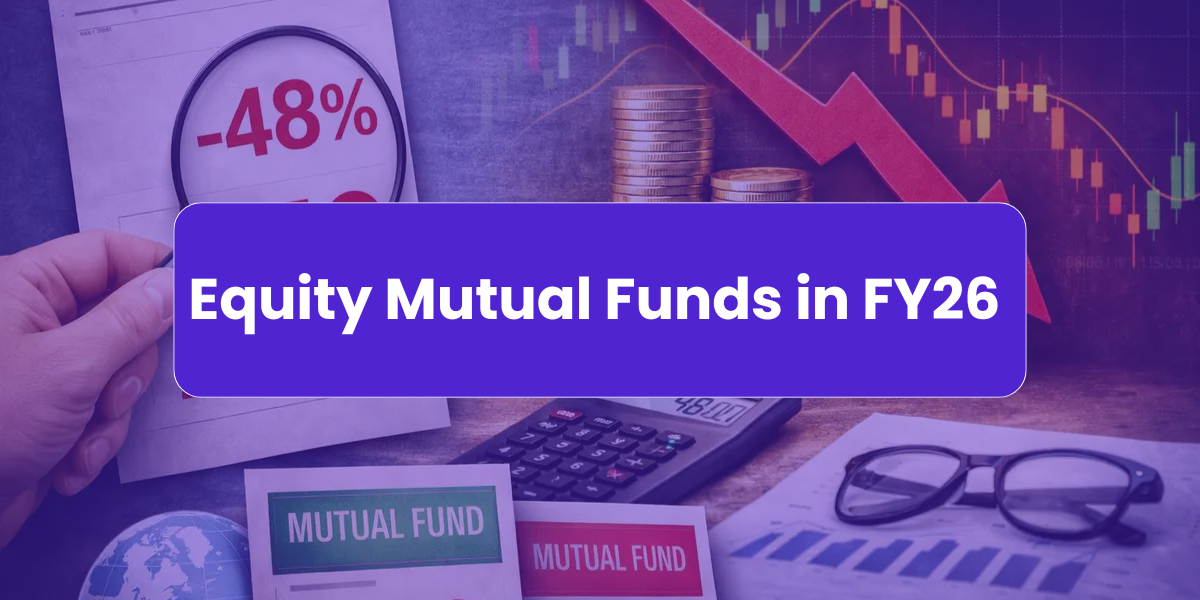
Equity Mutual Funds in FY26: Understanding the Sharp Decline in SIP Returns
The financial year 2026 (FY26) has been a defining period for Indian equity investors, particularly those investing through Systematic Investment Plans (SIPs) . A large number of equity mutual funds reported negative returns, with losses reaching up to 48% , raising concerns about market volatility and investment strategies. Despite SIPs being widely recognized as a disciplined and long-term wealth creation tool, FY26 has demonstrated that short-term market corrections can significantly impact returns . This comprehensive analysis by WeConsultIndia examines the reasons behind the decline, sectoral performance trends, and strategic actions investors should consider. Market Performance Overview: What Went Wrong in FY26? The decline in equity mutual fund performance was broad-based across categories: ✔ Majority of equity schemes delivered negative returns ✔ Mid-cap and small-cap funds witnessed sharper corrections ✔ Sectoral and thematic funds underperformed significantly ✔ Only a limited number of schemes remained in positive territory This indicates that the downturn was not isolated but reflected a system-wide market correction . Key Reasons Behind SIP Losses in FY26 1. Market Correction and Valuation Reset After sustained market rallies in previous years, FY26 saw a valuation correction , leading to a decline in stock prices across sectors. ✔ Overvaluation adjustments ✔ Profit booking by institutional investors ✔ Reduced liquidity in equity markets 2. Underperformance of High-Risk Segments Certain fund categories experienced disproportionate losses: ❌ Small-cap and mid-cap funds ❌ Sectoral and thematic funds (especially technology-focused funds) ❌ High-growth momentum stocks These segments are inherently volatile and more sensitive to market corrections. 3. Global vs Domestic Market Divergence A key structural trend observed in FY26: ✔ Domestic equity funds underperformed ✔ International funds showed relatively stronger performance Reasons: ✔ Strong performance in global markets (especially US equities) ✔ Technology sector growth globally ✔ Currency depreciation boosting overseas returns This highlights the importance of geographical diversification . 4. Interest Rate and Macroeconomic Pressures Macroeconomic factors played a critical role: ✔ Inflationary pressures ✔ Tight monetary policy ✔ Global economic uncertainty These factors negatively impacted equity valuations and investor sentiment. Critical Insight: SIP Does Not Eliminate Market Risk A major misconception among investors is that SIP investments are “safe” or immune to losses. Reality Check: ✔ SIP reduces timing risk ✔ SIP does NOT eliminate market risk ✔ Returns depend on market cycles and investment horizon Short-term losses are a natural outcome of equity investing during downturn phases. Why International Mutual Funds Performed Better International funds delivered relatively better returns due to: ✔ Strong performance of global equity markets ✔ Growth in technology and AI sectors ✔ Currency advantage due to INR depreciation This performance gap reinforces the importance of global asset allocation in modern portfolios. Strategic Actions for SIP Investors in 2026 1. Continue SIP Investments Stopping SIPs during a downturn can disrupt long-term wealth creation. Market corrections often provide opportunities to accumulate units at lower valuations. 2. Strengthen Portfolio Diversification An optimized portfolio should include: ✔ Domestic diversified equity funds ✔ International mutual funds ✔ Hybrid and debt instruments Diversification reduces overall portfolio risk. 3. Avoid Overexposure to High-Risk Segments Excessive allocation to: ❌ Small-cap funds ❌ Sectoral funds ❌ Thematic investments can increase volatility. A core-satellite approach is recommended. 4. Rebalance Asset Allocation Periodic portfolio review ensures: ✔ Alignment with financial goals ✔ Risk optimization ✔ Better long-term performance 5. Maintain a Long-Term Investment Horizon Equity investing is inherently cyclical. Long-term discipline remains the most critical factor in wealth creation. Key Lessons for Investors from FY26 ✔ SIP is not a short-term return strategy ✔ Market cycles directly influence returns ✔ Diversification is essential for risk management ✔ Emotional decision-making leads to losses ✔ Long-term consistency outperforms short-term reactions How WeConsultIndia Helps Investors Navigate Market Volatility At WeConsultIndia ( www.weconsultindia.in ) , we provide structured financial advisory services to help investors manage market risks effectively. Our Approach Includes: ✔ Portfolio diversification strategies ✔ Risk-based asset allocation ✔ SIP planning and optimization ✔ Global investment advisory ✔ Long-term wealth creation planning Our focus is on building resilient portfolios that perform across market cycles. Final Conclusion The decline of up to 48% in equity mutual fund SIP returns during FY26 underscores a fundamental principle — equity markets are volatile in the short term but rewarding over the long term . Rather than reacting to temporary losses, investors should focus on: ✔ Long-term investment discipline ✔ Strategic diversification ✔ Professional financial planning In today’s dynamic financial environment, informed decision-making and structured investment strategies are essential for sustainable wealth creation.

EDUCATION
Cost Pressure and Slow Funding: A Defining Challenge for Startups Today
The startup ecosystem is undergoing a fundamental shift. While innovation and entrepreneurial ambition remain strong, startups are increasingly facing intensifying cost pressures and slower access to funding . Rising operational expenses, cautious investor sentiment, and stricter financial scrutiny have reshaped how startups must plan, operate, and grow. In this environment, success is no longer driven by rapid expansion alone. It is defined by financial discipline, strategic clarity, and the ability to build sustainable business models . Understanding the Current Funding Landscape Over the past few years, investor priorities have evolved significantly. Funding decisions are now driven by: Clear revenue models and defined profitability pathways Strong governance and regulatory compliance frameworks Efficient cost structures and sound unit economics Sustainable growth strategies rather than aggressive scaling As a result, startups are experiencing longer fundraising cycles and increased valuation sensitivity . This shift has made it essential for founders to operate with greater precision, transparency, and control. Rising Cost Pressure and Its Impact on Startups Cost pressure has emerged as one of the most critical challenges for startups. Expenses related to talent acquisition, technology infrastructure, compliance, and day-to-day operations continue to rise, while capital availability has become more selective. Without a structured approach, startups face risks such as: Cash flow instability Reduced operational efficiency Delayed or stalled growth initiatives Increased dependency on external funding Managing costs effectively—without compromising business momentum—has become a strategic priority rather than an operational concern. Strategic Advisory as a Competitive Advantage In periods of financial constraint, startups benefit significantly from expert consulting and structured advisory support . Professional consulting enables founders to move away from reactive decision-making toward planned, data-driven strategies . At WeConsultIndia ( www.weconsultindia.in ) , we support startups in navigating cost pressure and funding challenges through comprehensive advisory solutions. Our approach focuses on strengthening the business fundamentals, ensuring stability today while preparing for future growth. WeConsultIndia helps startups: Analyze and optimize cost structures Improve financial planning and cash flow visibility Strengthen compliance and governance frameworks Align business strategy with current investor expectations This enables startups to operate efficiently even in capital-constrained environments. Building Resilience Through Financial and Operational Discipline Startups that sustain and grow during funding slowdowns are those that prioritize resilience over unchecked expansion . This typically involves: Focusing on core, revenue-generating activities Streamlining operations and eliminating inefficiencies Making informed hiring and technology investments Monitoring performance through key financial and operational metrics WeConsultIndia works closely with founders to implement disciplined operating frameworks that support long-term sustainability and scalability. Preparing for Funding with the Right Strategy Slow funding does not indicate a lack of opportunity. Investors continue to support startups that demonstrate clarity, control, and credibility . Strategic consulting plays a vital role in preparing startups for funding by strengthening financial narratives, operational structures, and compliance posture. With the right advisory support, startups can convert current market challenges into long-term strategic advantages. Professional Insight from WeConsultIndia Leadership Sharing his perspective, Arun Kumar Mangla , associated with WeConsultIndia, notes: “The current funding environment demands a shift in mindset for startups. Growth must be backed by financial discipline, governance, and clear execution. At WeConsultIndia, we help founders move from survival-driven decisions to strategy-led growth—ensuring they are resilient today and investable tomorrow.” This insight reflects WeConsultIndia’s philosophy of building strong fundamentals before pursuing scale . Why Startups Choose WeConsultIndia Startups partner with WeConsultIndia because we offer: Practical, founder-focused consulting solutions Strong emphasis on financial discipline and risk management Alignment with evolving investor and market expectations Long-term strategic advisory rather than short-term fixes Our objective is to help startups navigate uncertainty with confidence and emerge structurally stronger Conclusion: Navigating the New Startup Reality Cost pressure and slow funding are now defining elements of the startup journey. Success in this environment depends on strategic planning, operational efficiency, and expert advisory support . By partnering with WeConsultIndia , startups gain the clarity and structure required to manage costs, strengthen fundamentals, and prepare for sustainable growth—regardless of market conditions.

EDUCATION
Beware of Fake Trademark Registration Platforms: How to Protect Your Brand the Right Way
In recent years, trademark registration in India has gone digital — making the process faster and more accessible. Unfortunately, this convenience has also opened the door to fake online platforms that mislead entrepreneurs with false promises like “instant trademark approval” or “guaranteed registration.” Many business owners, startups, and MSMEs fall into this trap and lose not just money, but also valuable time and legal protection for their brand. This guide will help you understand: How trademark scams operate How to find a genuine trademark attorney or agent The correct legal procedure for trademark registration The real timelines you should expect Why Fake Trademark Platforms Are a Serious Risk Fraudulent trademark service websites often look professional and claim to be government-linked or legally authorised. In reality, many of them: Are not registered trademark agents or advocates Have no legal authority to represent clients Use misleading advertising to attract customers Disappear once payment is made The damage caused by such platforms includes: Incorrect or incomplete filing Missed deadlines Invalid trademark applications No legal support in case of objections or disputes In short, your brand remains unprotected even after spending money. How to Identify an Authentic Trademark Attorney or Agent Only two categories of professionals are legally authorised to represent applicants before the Trademark Registry in India: Registered Trademark Agents Advocates enrolled with a State Bar Council Checklist to verify authenticity Before hiring anyone, make sure you: Ask for their registration or enrolment details Confirm their status on the official IP India portal or Bar Council records Ensure they provide a formal engagement letter Receive official receipts and filing acknowledgements Can track your application on the government website yourself Red flags to avoid Stay away from anyone who: Promises guaranteed approval Claims registration in a few days Uses only WhatsApp or social media for communication Cannot share legal credentials Avoids written agreements Click to Download the official government PDF on trademark registration and authorised agents The Correct Procedure for Trademark Registration in India Understanding the real process protects you from being misled. Step 1: Trademark Search A professional checks whether your brand name, logo, or slogan conflicts with existing trademarks. Step 2: Filing the Application The application is filed on the official trademark portal either by: The applicant directly, or An authorised advocate or registered trademark agent Step 3: Acknowledgement You receive a Trademark Application Number , which allows you to track your case online. Step 4: Examination The Trademark Office reviews your application for: Similarity with existing marks Legal compliance Distinctiveness Step 5: Reply to Objections If objections are raised, a legal response is submitted and a hearing may be required. Step 6: Journal Publication Once accepted, your trademark is published in the Trademark Journal for public review. Step 7: Registration If no opposition is filed, your trademark is registered and you receive the Registration Certificate . Realistic Trademark Registration Timeline Honest professionals never promise instant results. Here is what actually happens: Stage Approximate Time Application filing 1–2 days Examination report 1–3 months Reply & hearing (if needed) 2–6 months Journal publication 3–4 months Final registration 12–18 months on average Any website claiming registration in a few days is not being truthful . How to Protect Yourself from Trademark Scams Follow these simple rules: Work only with authorised professionals Track your trademark status personally Never rely only on ads or social media claims Always demand invoices and written commitments Report suspicious services to cybercrime authorities Why Choosing the Right Trademark Expert Matters Your trademark is not just a formality — it is the legal foundation of your brand identity. A wrong filing today can create years of legal trouble tomorrow. Choosing a genuine trademark professional ensures: Correct filing Legal accountability Proper handling of objections Strong protection for your brand Final Words: Protect Your Brand, Not a Scammer In the digital age, trust must be earned — not advertised. Before you pay any online platform for trademark registration, remember: There are no shortcuts in law. Only the right process leads to real protection. Invest in authenticity. Choose authorised professionals. And safeguard what truly matters — your brand.